
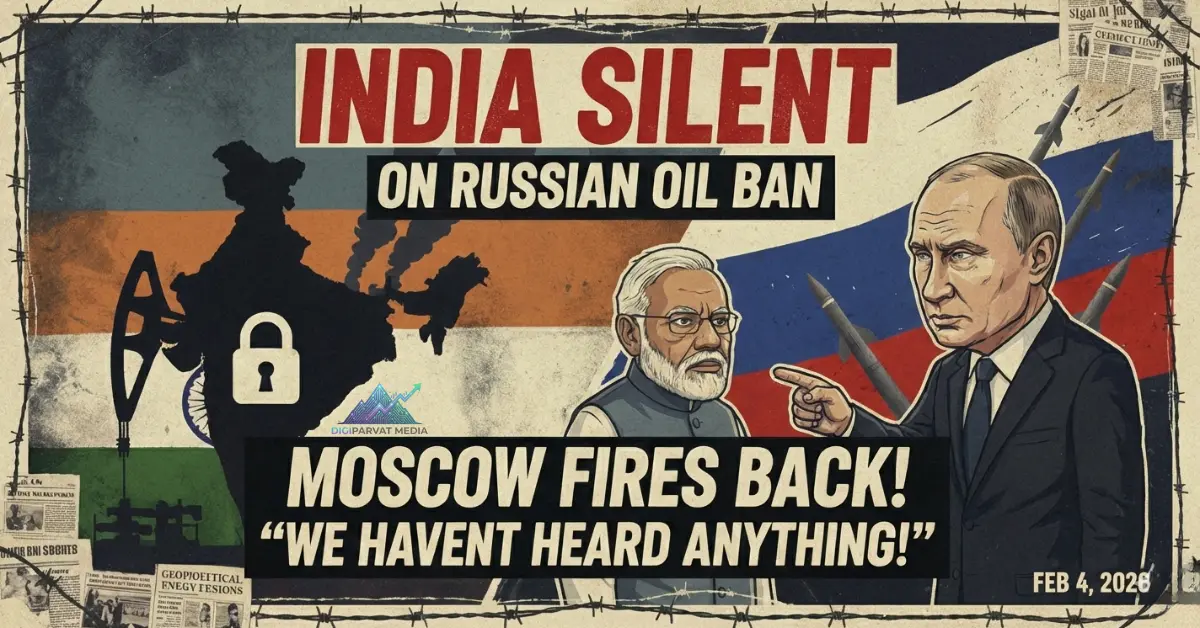
India Silent on Russian Oil Ban – Moscow Fires Back: “We Haven’t Heard Anything!”
As the West tightens sanctions on Russian oil, India remains strategically silent. Moscow’s pointed response reveals a deepening geopolitical divide. Explore the high-stakes calculus behind India’s position. February 4, 2026
India Ghosting Russia on Oil Ban? Moscow Drops Jaw-Dropping Truth Bomb!
In a geopolitical plot twist that’s got energy markets buzzing, Moscow just spilled the tea: India hasn’t whispered a word about halting its massive Russian oil purchases. As Western sanctions tighten around Russia’s energy exports, India’s silence is louder than ever—and it’s shaking up global oil dynamics in ways few predicted.
The Shocking Revelation: What Moscow Just Said
Notably, Russia’s deputy foreign minister, Andrey Rudenko, laid it bare in a recent interview. “We haven’t heard anything from India about stopping purchases,” he stated bluntly, highlighting the unbreakable India-Russia energy bond. Furthermore, despite mounting U.S. and EU pressure to ditch discounted Russian crude, India ramped up imports to a record 1.5 million barrels per day in 2025.
Here’s the kicker: That’s not just fuel for India’s booming economy—it’s a masterclass in strategic independence. Importantly, New Delhi is playing a careful game, neither defying Western sanctions outright nor bowing to pressure. Instead, India’s quietly become the world’s top buyer of Russian oil, leaving geopolitical analysts speechless.
Why India’s “Quiet Mode” Works Perfectly
To begin with, this partnership goes deeper than mere economics. India’s refineries, particularly those operated by Reliance and Nayara Energy, are specifically optimized for Urals crude—Russia’s primary export grade. Consequently, switching suppliers would require massive infrastructure investments and operational headaches.
Moreover, the financial incentive is undeniable. Discounted Russian oil keeps pump prices stable amid India’s persistent inflation woes. As a result, everyday Indians benefit from cheaper fuel, powering everything from Mumbai traffic to Dehradun factories. Additionally, the savings extend to India’s booming manufacturing and logistics sectors, giving them a global competitive edge.
The Bigger Picture: Oil, Power, and Shifting Alliances
In addition to immediate economic benefits, India’s oil strategy reveals fundamental shifts in global power dynamics:
- Economic Edge: India’s Russian oil imports jumped over 1,000% since 2022, making Russia its #1 supplier ahead of Saudi Arabia and Iraq.
- Sanctions Dodge: New Delhi refines and re-exports oil (hello, Europe via back channels), turning geopolitics into profit.
- Global Ripple: With Brent crude at $75/barrel, India’s bargain-hunting stabilizes Asian markets—while irking Washington.
Conclusion: India’s Masterstroke in Global Energy Chess
Ultimately, Moscow’s revelation exposes India’s brilliant multi-alignment strategy at work. By refusing to choose sides between Russia and the West, New Delhi extracts maximum economic benefit while maintaining strategic flexibility. This isn’t just about oil—it’s about asserting India’s arrival as a global power that writes its own rules.
The real winner here? The 1.4 billion Indians enjoying stable fuel prices while their country flexes economic muscle on the world stage. As Russia-West tensions escalate, expect India to continue this pragmatic dance—securing cheap energy today while building renewable capacity for tomorrow.
Bottom line: India’s “radio silence” on Russian oil isn’t weakness. It’s calculated strength. And in 2026’s fractured world order, that makes New Delhi the geopolitical dealmaker everyone wants at their table.
Frequently Asked Questions (FAQs)
1. How much Russian oil does India actually import?
Currently, India imports 1.5 million barrels per day from Russia—making it the world’s largest buyer of Russian crude. This represents roughly 40% of India’s total oil imports, a staggering increase from virtually zero before 2022.
2. Why doesn’t India face Western sanctions for buying Russian oil?
Surprisingly, India benefits from strategic ambiguity. While the U.S. and EU criticize the purchases, they haven’t imposed secondary sanctions on Indian companies. This reflects India’s importance as a counterweight to China and key defense partner.
3. Is Russian oil cheaper for India?
Absolutely. Russia sells Urals crude at $20-30 per barrel discounts compared to Brent benchmark prices. For context, this saves India $5-7 billion annually—enough to fund major infrastructure projects or social welfare programs.
4. What happens if the U.S. imposes sanctions on Indian refineries?
Then, India faces tough choices. Options include accelerating Middle East imports, investing heavily in refining upgrades, or doubling down on renewables. However, analysts predict gradual diversification rather than abrupt cuts given economic realities.
5. Will India stop buying Russian oil eventually?
Probably not anytime soon. India’s refineries need 2-3 years minimum for retooling, and discounted Russian oil remains economically irresistible. Meanwhile, strategic ties with Russia (defense, space, nuclear) make complete decoupling unlikely.
6. How does this affect petrol prices in India?
Directly and positively. Discounted Russian imports keep India’s import bill lower, translating to more stable pump prices despite global volatility. Without Russian oil, petrol could easily jump ₹10-15 per liter.
7. Is India helping Russia evade sanctions?
Technically yes, indirectly. India refines Russian crude then exports refined products globally (including to sanctioning countries). This creates a legal loophole—raw crude is sanctioned, but refined products aren’t.
Disclaimer: This blog post is an original analysis based on publicly reported facts and geopolitical context. It is intended for informational purposes and reflects the author’s interpretation of events.
About the Author