
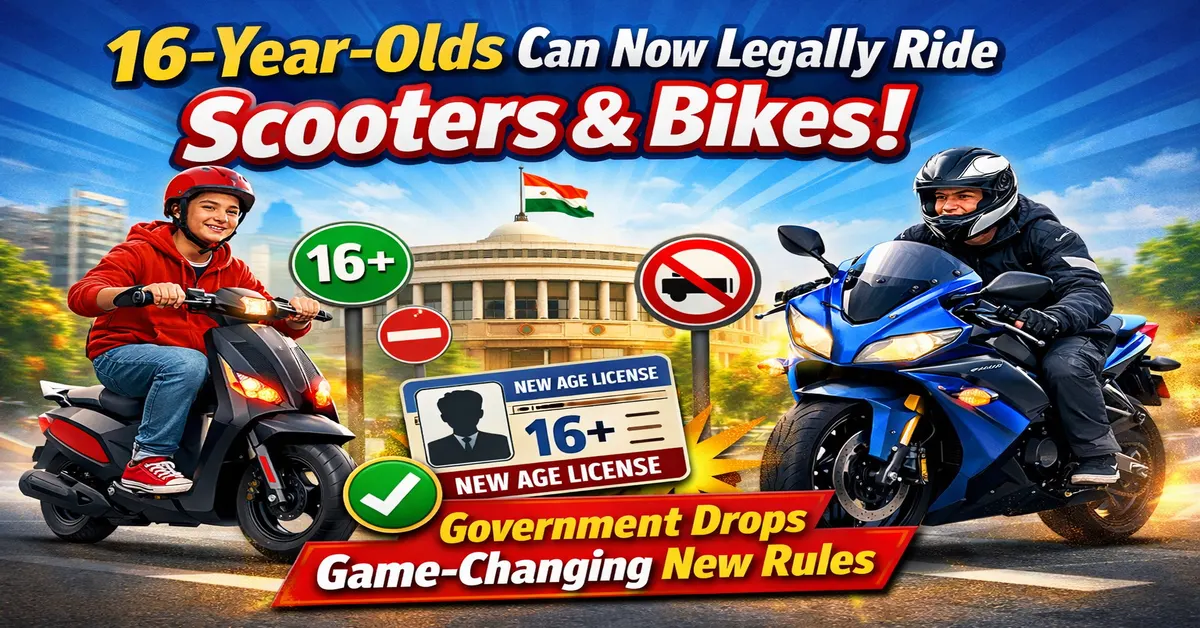
Big update in traffic rules: 16-year-olds are now legally allowed to ride scooters and bikes after the government’s latest announcement.
Hold onto your helmets, India! In a landmark move set to redefine urban mobility and empower the youth, the Government of India has officially announced revised regulations allowing 16-year-olds to legally ride scooters and motorcycles. This isn’t just a small policy tweak—it’s a transformative shift that will impact millions of families, reshape daily commutes, and unlock new freedoms for teenagers across the nation.
At Digiparvat, we’re diving deep into what this means for you, the new rules you must know, and how to ensure safety remains paramount in this new era.
The Big Announcement: Decoding the New Rules
Gone are the days when 18 was the universal gatekeeper for two-wheeler licenses. Recognising the need for practical mobility solutions for older teenagers—especially for educational purposes—the Ministry of Road Transport and Highways (MoRTH) has introduced a graduated licensing system for 16-year-olds.
Here’s the breakdown of the game-changing rules:
- Eligibility Age: Individuals who have turned 16 years old are now eligible to apply for a two-wheeler learner’s license (LL).
- Vehicle Cap: The license is valid for geared and non-geared scooters and motorcycles with an engine capacity of up to 125cc. This keeps initial rides manageable and safe for new riders.
- Mandatory Training: Applicants must complete a certified 15-hour training program from government-recognised driving schools. This includes 10 hours of practical riding and 5 hours of theoretical education on traffic rules, signs, and defensive driving.
- Learner’s License (LL) Period: A mandatory 6-month Learner’s License period is required. During this time, the rider must display an ‘L’ plate and cannot carry a pillion rider.
- Permanent License: After completing the 6-month LL period and passing a final practical driving test, the individual can obtain a permanent driving license valid for two-wheelers up to 125cc until they turn 18.
Why This Change is a Masterstroke
This policy revision is a well-considered response to several ground realities:
- Educational Empowerment: It eases commute challenges for students traveling to junior colleges, coaching centers, and part-time jobs.
- Reduced Dependency: It lessens the burden on parents for daily drop-offs and pick-ups.
- Economic Boost: It’s expected to positively impact the two-wheeler industry, making 125cc segment vehicles more accessible to a new demographic.
- Cultivating Responsibility: Introducing structured training at a younger age can foster a generation of more disciplined, rule-aware riders from the start.
Safety First: Non-Negotiables for New Young Riders
With great freedom comes great responsibility. The success of this initiative hinges on safety.
- Helmet is Holy: A ISI-certified helmet is compulsory for both rider and pillion (after LL period). No exceptions.
- No Speed Thrills: The 125cc cap is designed for control. Reckless speeding defeats the purpose of this graduated system.
- Zero Tolerance for Drunk Driving: The legal drinking age is 21. Driving under influence (DUI) laws apply strictly, with severe penalties for underage offenders and their guardians.
- Documents on Demand: The new license, vehicle RC, insurance, and PUC must always be carried while riding.
What Parents and Teenagers Need to Do Next
For Teenagers:
- Start researching certified driving schools in your area.
- Begin gathering necessary documents: Age proof (Birth Certificate/Class 10th Marksheet), address proof, and passport-sized photographs.
- Adopt a mindset of learning, not just getting a license.
For Parents:
- Have an open conversation about road safety and responsibility.
- Choose the first vehicle wisely—prioritise safety features like ABS/CBS over looks.
- Consider a “family riding agreement” outlining rules and consequences.
FAQs: Your Questions Answered
Q1: Can a 16-year-old ride any bike or scooter?
A: No. The license is valid only for two-wheelers with an engine capacity up to 125cc. This includes many popular scooter and motorcycle models.
Q2: Is the training program mandatory?
A: Yes, absolutely. The 15-hour certified training from a recognised driving school is compulsory before applying for the Learner’s License.
Q3: Can the 16-year-old carry a friend on the bike?
A: Not during the 6-month Learner’s License period. After obtaining the permanent license, carrying one pillion rider is permitted, provided both wear helmets.
Q4: What happens when the rider turns 18?
A: Upon turning 18, they can apply for a regular, unrestricted two-wheeler license without needing to take a new test, provided their current license is valid.
Q5: Are there any restrictions on where they can ride?
A: The license is valid across India. However, individual states or cities may have specific zone restrictions (like no-entry in certain congested areas). Always check local traffic rules.
Conclusion: A New Road Ahead
The government’s decision to allow 16-year-olds to ride scooters and bikes is a progressive, confident step towards modernising India’s mobility landscape. It trusts the youth with responsibility while putting a robust framework of training and restrictions in place to safeguard them.
This change is about more than just convenience; it’s about independence, maturity, and integrating the next generation into the transport ecosystem with knowledge and caution.
At Digiparvat, we encourage all new eligible riders and their parents to embrace this change with a focus on safety, education, and respect for the road. Let’s make this new freedom a foundation for a safer driving culture in India.
Ready to take the first step? Check out our detailed guide on ‘How to Apply for Your Learner’s License and ride into the future, responsibly!
Disclaimer: This blog post is based on the latest government notifications as of February 2026. Readers are advised to always refer to the official MoRTH website or regional RTOs for the most current and specific guidelines.
About the Author