
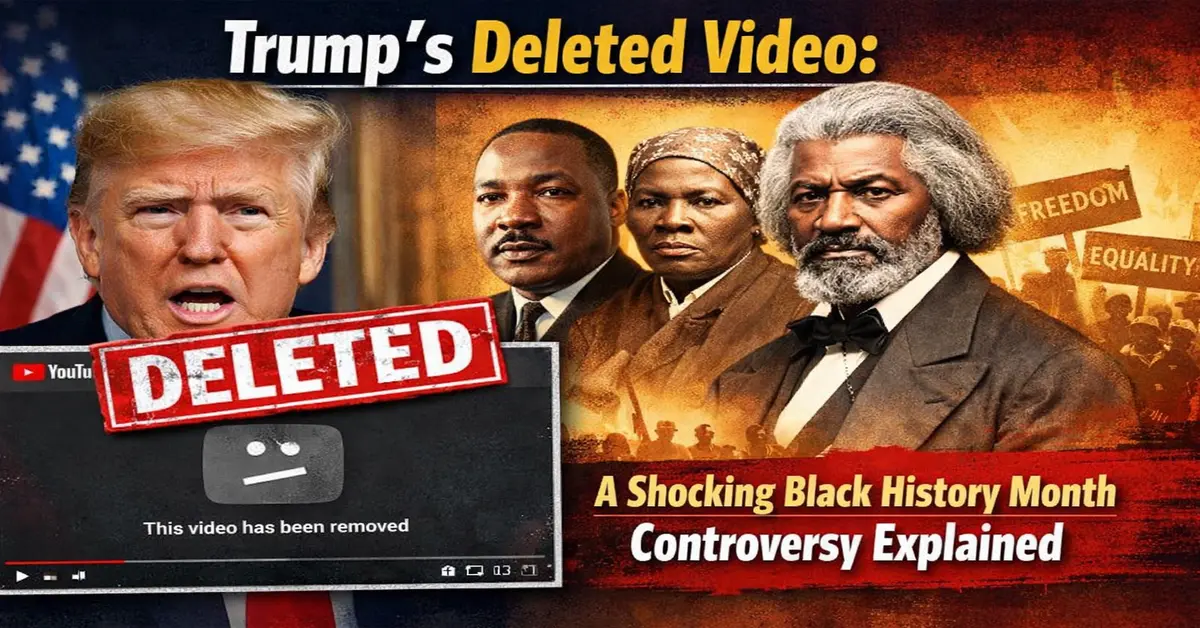
In a move that has ignited a firestorm of criticism, former President Donald Trump posted—and then swiftly deleted—a video on his Truth Social platform that used manipulated imagery to depict former President Barack Obama and former First Lady Michelle Obama as apes. The timing, during Black History Month, has amplified the outrage, leading to intense scrutiny of political discourse, digital ethics, and the spread of racist tropes.
At Digiparvat, we break down the incident, the immediate fallout, and the deeper questions it raises for our online and political landscape.
What Exactly Happened?
On February [Date], Donald Trump’s official Truth Social account shared a video that featured a parody of a movie awards show. Within the clip, a brief, digitally altered segment appeared showing the faces of the Obamas superimposed on the bodies of apes. The video was live for several hours before being removed.
While the Trump campaign has not issued a formal statement on the creation of the video, the act of sharing it—and the subsequent deletion—speaks volumes. This incident did not occur in a vacuum; it follows a long history of “dehumanizing” imagery being used as a political tool, particularly against people of color.
Why the Timing Makes It So Explosive
The decision to post this video during Black History Month is a critical part of the story. This month is dedicated to recognizing and celebrating the achievements, history, and resilience of Black Americans. Sharing a video that employs a historically racist trope—the false and offensive comparison of Black people to primates—during this period is seen as particularly egregious and dismissive.
It transforms the incident from a mere “controversial post” into a symbolic act that many interpret as a direct affront to the significance of the observance and to the Obamas’ legacy.
The Immediate Backlash and Reactions
The reaction from political figures, media, and the public was swift and severe:
- Political Condemnation: Democrats and many Republican figures condemned the video. The Biden campaign labeled it “vile and racist,” while civil rights groups like the NAACP called for accountability.
- Media Analysis: News outlets across the spectrum highlighted the use of a well-known racist trope, tracing its history back to centuries of propaganda used to justify slavery and segregation.
- Public Discourse: Social media became a battleground, with many users expressing horror and disappointment, while others defended it as a “joke” or political satire, highlighting the deep divisions in how such content is perceived.
Beyond the Outrage: Digital Ethics and Political Strategy
This incident forces us to confront several uncomfortable realities:
- The Normalization of Inflammatory Content: The use of shock value and racially charged imagery in political messaging has become a dangerous strategy to galvanize a base, often at the cost of social cohesion.
- The “Post-and-Delete” Tactic: Posting controversial content and then removing it after it has been widely captured and reported is a modern digital strategy. It ensures the message reaches core supporters and dominates news cycles, while offering a thin veneer of plausible deniability.
- Platform Responsibility: Incidents like this put immense pressure on social media platforms (even ones like Truth Social) to define and enforce clear policies against hate speech and dehumanization.
FAQs: Your Questions Answered
Q1: Did Donald Trump personally create the video?
A: There is no evidence he created it. However, by choosing to share it on his official channel, he endorsed and amplified its content to his millions of followers.
Q2: Why is comparing Black people to apes considered so racist?
A: This trope has a centuries-old history in pseudo-scientific racism and propaganda used to falsely argue that Black people are less evolved or subhuman, thereby justifying slavery, colonialism, and segregation. Its use is deeply rooted in hate.
Q3: What has been the Trump campaign’s response?
A: As of this writing, the campaign has not provided a detailed statement. The video was simply deleted from the profile.
Q4: Can legal action be taken for such posts?
A: While morally reprehensible, such content often falls under protected political speech in the U.S., making legal action difficult. The consequences are primarily social, political, and reputational.
Conclusion: A Moment of Reckoning
The posting and deletion of this video is more than a 24-hour news cycle story. It is a stark reflection of the state of American political dialogue. It challenges us to question what is deemed acceptable in public discourse and the ethical lines that are being crossed for political gain.
At Digiparvat, we believe that dissecting such events is crucial. Understanding the historical weight of racist imagery, the mechanics of digital propaganda, and the erosion of civil discourse is essential for an informed citizenry. This incident serves as a painful reminder that progress is fragile, and vigilance against dehumanization, in any form, is a continuous necessity.
What are your thoughts on the intersection of digital media and political responsibility? Share your perspectives in the comments below.
About the Author